
Network management that keeps connectivity off your team’s radar.
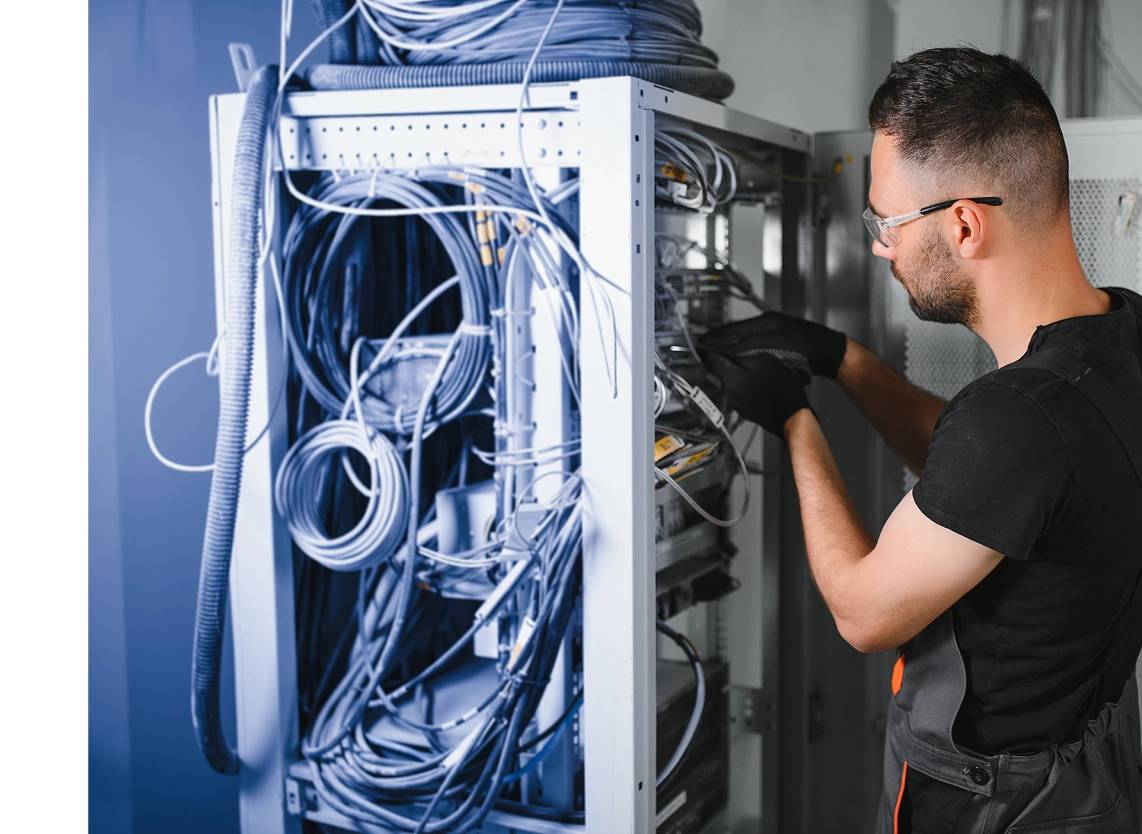
Every layer of your network, managed as one environment.
A network isn’t a single piece of equipment. Here’s what Wingman covers.
Switches And Routers
The hardware your network runs on: properly configured, monitored, and maintained. Including the firmware updates and configuration changes most networks fall behind on.
Performance Monitoring
Continuous monitoring of network performance. Bandwidth, latency, errors, and emerging issues. Slowdowns identified and addressed before your team has to log a ticket.
Network Architecture And Segmentation
A network designed with proper structure. Separated zones for security, performance, and management. Most business networks grew organically; we redesign for how they should actually work.
Vendor And ISP Coordination
The work of dealing with your internet provider when something goes wrong, or your network vendor when equipment needs attention. Coordination handled by us, not pushed back to your team.
Documentation And Network Mapping
Every device, every connection, every configuration documented. When something needs to change, we know what depends on what before we touch anything.
Ongoing Optimization
Networks aren’t static. As your business grows and your traffic patterns change, your network needs adjustment. We do that work continuously, not just when something breaks.
When the network underperforms, everything underperforms.
Slow file access, unreliable video calls, apps that lag for no reason. The symptoms scatter, but the cause is usually the network. Networks tend to degrade gradually, not fail suddenly, so the problems go unnoticed until they’re affecting how your team works.
Proper network management catches the degradation before it becomes friction. The work is mostly invisible. The result is a network your team doesn’t have to think about.
What proper network management looks like.
Designed With Structure.
Networks that grew organically over years tend to have the same problem: no clear structure. We design networks with proper segmentation, naming, and architecture so they perform well and scale cleanly.
Monitored Continuously.
The visibility most businesses lack on their own network is what allows problems to compound. We monitor performance, traffic, and configuration changes and address what’s emerging.
Documented As It Evolves.
Every change to your network is captured in documentation that stays current. When something needs attention, the history is already there.
Coordinated Across Vendors.
Internet providers, hardware vendors, and software vendors. The coordination work that comes with a network goes through us, not back to your team.
Can you take over our existing network?
Yes. We start with a full audit. What equipment is in place, how it’s configured, what’s documented, and where the gaps are. From there we address what needs attention and take ownership of ongoing management.
What's the difference between network management and firewall management?
Network management is about how your network operates. Performance, connectivity, traffic, equipment health. Firewall management is specifically the security layer that controls what traffic enters and leaves the network. They work together, and we manage both.
Do you handle our internet provider directly?
Yes. When there’s an issue with your internet service, we work with your provider directly, not through your team. Coordination is part of how we manage the network.
What about wireless?
Wireless networking is covered as a separate, more detailed service. For most clients, wireless is managed as part of the broader network but the configuration, security, and performance considerations are distinct enough that we treat it as its own service.
View all
Your team shouldn’t have to think about connectivity.
Let’s talk about how your network is performing, and what proper management would look like.